FCT digital services
Integration of Repositories with the CIÊNCIAVITAE makes managing resumes easier.
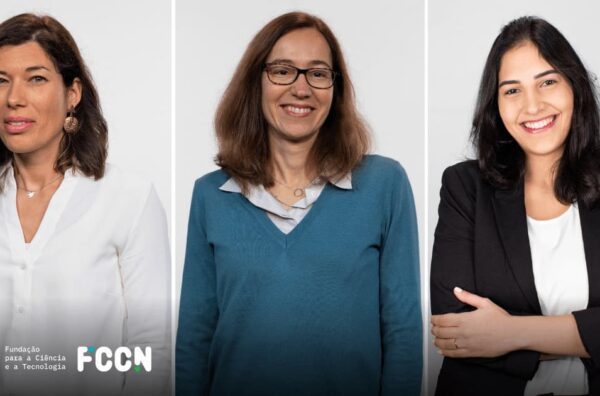
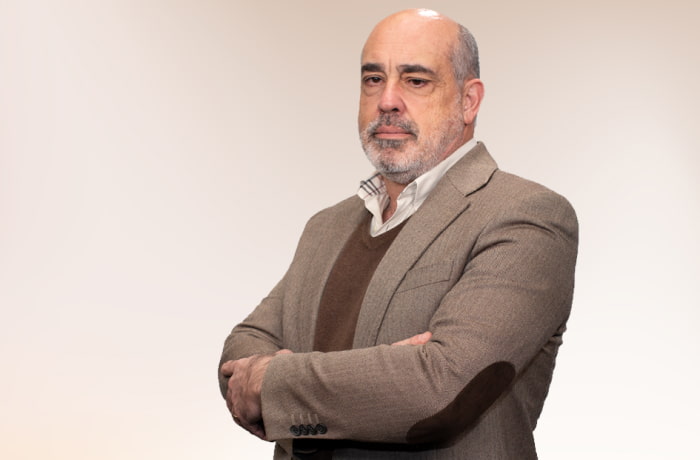
The manager of the Open Access Scientific Repositories of Portugal (RCAAP) – Paulo Lopes, from the Open Access Scientific Repositories of Portugal, tells us all about the main steps taken by this FCCN service which, in 2022, registered more than 25 million downloads. The role of RCAAP Achieving the goals of Open Science is another key point.
THE RCAAP It is open to participation from all institutions within the Portuguese scientific and higher education system. What does an institution gain by formalizing this membership?
THE RCAAP – Open Access Scientific Repositories of Portugal is the national open access initiative and aims to store, preserve, and promote access to scientific knowledge produced in Portugal. The institutions that make up the RCAAP network benefit from the three main objectives of this service.
First and foremost, they increase the visibility, accessibility, and dissemination of the results of Portuguese academic activity and scientific research. The creation and provision of a meta-repository of Portuguese scientific and academic production, enabling easy and intuitive search, access, and use, has been a significant asset, both nationally and for each of the participating institutions.
On the other hand, it is possible to facilitate access to information on national scientific production through the interconnection and interoperability of the meta-repository with other components of the Science, Technology, and Higher Education information system. National scientific production repositories are interconnected and interoperate with other components of these systems, especially with the curriculum management system— Ciência Vitae.
Finally, the RCAAP This allows Portugal to be integrated into a set of international initiatives aimed at facilitating interoperability and interconnection with the growing number of research centers, research funding bodies, and higher education institutions with repositories of this type that have proliferated in Europe and around the world.
Are there any numbers or statistics you can share to illustrate the activity of this service?
The activities of RCAAP They are constantly monitored, and there are several indicators that attest to the service's activity. I'll share the most relevant ones, which relate to usage indicators. Currently the RCAAP aggregates more than 878,000 documents. from 27 repositories hosted on the SARI service, 35 scientific journals hosted on the SARC service, 95 communities hosted on the Common Repository, 26 self-managed repositories, and 178 self-managed scientific journals. It also aggregates more than 1,970,000 documents from the Brazilian aggregator, OASIS.BR. These aggregated documents generated more than 25 million downloads.
THE RCAAP [It] has played an important role in promoting the adoption of the open access movement to scientific knowledge in Portugal. What are some of the main recent achievements in this regard?
Currently, the vast majority of institutional repositories have their own open access policies and have adopted standards and practices that promote open access and interoperability between systems. Many institutions are linking their repositories to science management systems to allow for the integrated management of all their scientific output. The community is highly participatory and frequently contributes to the adoption and dissemination of open science practices. Changes have also been observed in the field of journal publishing that have led to the adoption of open science practices, such as open peer review, continuous publication, the introduction of persistent identifiers for publications (Digital Object Identifier ( DOI )) and authors (Open Researcher and Contributor ID ( ORCID )), CC-BY 4.0 licensing, and the possibility of allowing the publication of preprints.
The open access movement seeks to achieve significant changes. Do you think the scientific and educational system in Portugal is closer to achieving this movement's goals today?
The road is long, requiring changes, the adoption of new practices, regulatory policies for open access, and tough negotiations with major content publishers. But yes, the education system in Portugal is now closer to the objectives of the Open Science and Open Access movements. RCAAP plays an important role in achieving these objectives.
What are the next steps planned for the RCAAP?
Efforts over the next three years will be focused primarily on migrating the SARI service to the new version of the repository software, DSPace 7. This is a radically different version from the previous one and will pose significant challenges in terms of resource migration, repository management, and usage.
It will also be a period in which the RCAAP will support developments for the new back-end version of the Portal RCAAP, Specifically, this will involve a management and control interface for the processes of aggregating and indexing information from repositories. This will allow the managers of these resources to control and correct these processes themselves. Finally, a new frontend interface will also be developed for the Portal. RCAAP.
Publicado em May 30, 2023