Saltar para o conteúdo principal

The Portuguese Current Research Information System ( PTCRIS ) program facilitates the management of and access to information about national scientific activity.

PTCRIS

Profile extensions CERIF/OpenAIRE

Img_PTCRIS_API-SciPROJ-01@2x
Semantic enrichment

Extensions PTCRIS for interoperability

To enhance the interoperability of the national registry that aggregates funding and project information. (SciPROJ), the PTCRIS Introduces metadata extensions to the Common European Research Information Format profile. (CERIF)Data profile adopted for publication and European integration. (OpenAIRE). These extensions are available in the vocabulary. PTCRIS and can be returned by Application Programming Interfaces (API), without breaking compatibility with existing implementations.

How it Works

Extension to profile metadata CERIF OpenAIRE

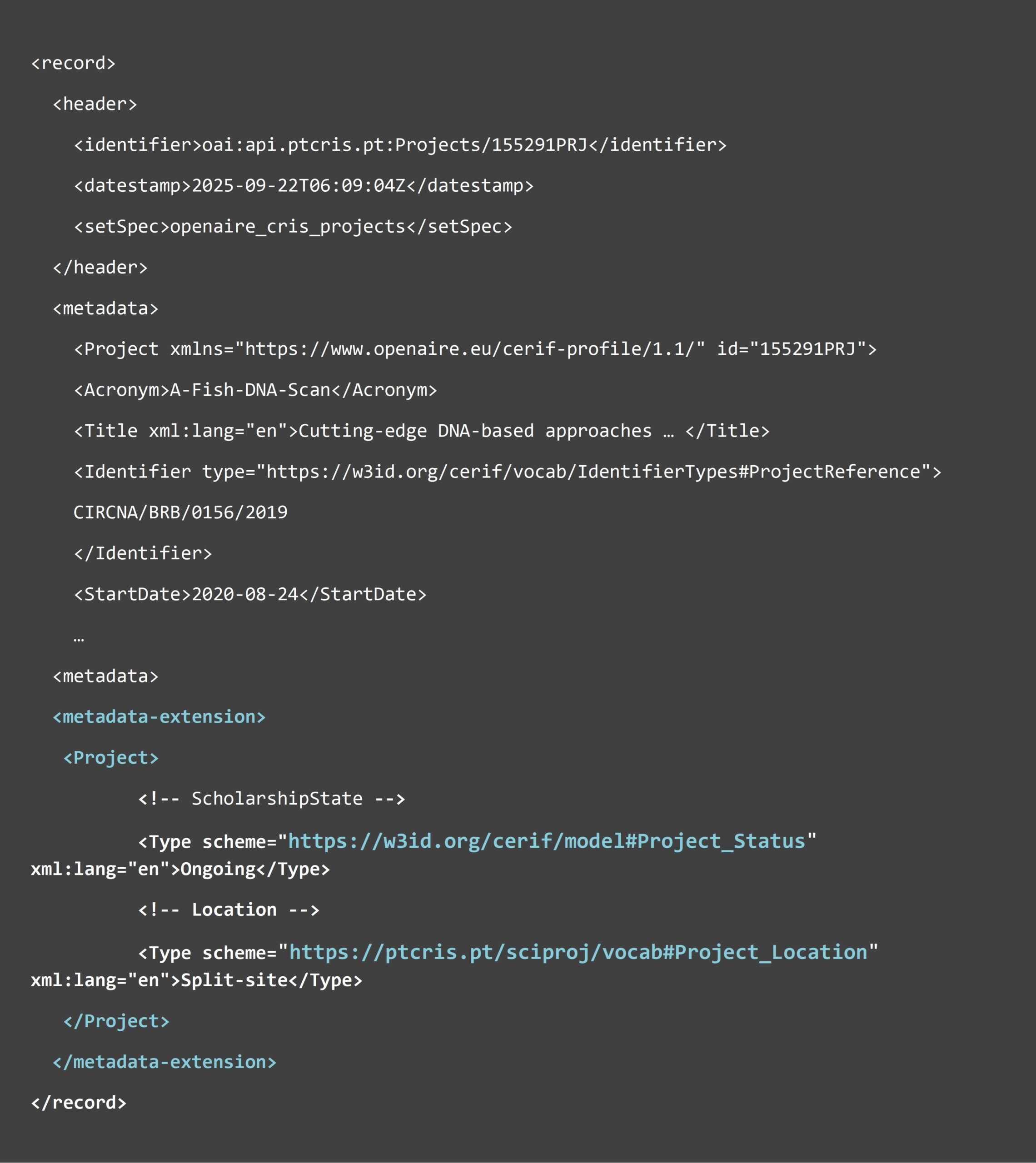
Currently, the Interchange Format model used for interoperability between systems ( CERIF-XML ) used for project description in the SciPROJ database, available via API , organizes each record in the component, which contains two main sections:

<header>: includes repository-level metadata; and
<metadata>: contains the main descriptive attributes of the project.

This structure allows for a complete and standardized description of the main attributes of each project, ensuring interoperability between systems and compatibility with the profile. CERIF from the OpenAIRE. Within the context of the evolution of the model CERIF-XML For better interoperability and semantic enrichment of project records, a new tag is introduced with the reference <metadata-extension>. This extension will allow for the structured inclusion of relevant attributes for each funded activity.

The introduction of this extension aims to semantically enrich project records, allowing external systems to interpret and aggregate data consistently; ensure interoperability with different taxonomies; and enable future thematic, bibliometric, and scientific and social impact analyses and reports.metadata-extensionIt will function as a dedicated space for these additional attributes, while maintaining the core. CERIF-XML from the database SciPROJ intact and compatible with existing systems.

 Example of extensions via metadata-extensions

In the context of the service API for access to project records of SciPROJ (https://api.ptcris.pt/services/searches/projects), A new parameter, `extensions=true`, should be introduced. This attribute will allow the response from... API Include additional information in the record, enriching the project metadata without affecting the standard structure.

Example of the call to API with the “extensions” attribute”

In the context of the service API for access to project records of SciPROJ (https://api.ptcris.pt/services/searches/projects), a new parameter should be introduced. extensions=true. This attribute will allow the response from API Include additional information in the record, enriching the project metadata without affecting the standard structure.

Extensions

THE PTCRIS introduces new semantic concepts to enrich the registers of SciPROJ. The profile CERIF The current system covers essential attributes (identifiers, dates, titles, etc.), but does not unequivocally distinguish the lifecycle of grants or their geographic context. The new attributes ensure semantic consistency, comparability between institutions, and improved analytical capabilities (dashboards, aggregators, reports).

  • Exemplo de representação da tag Status com o atributo "Ongoing".

    Administrative state

    The inclusion of the administrative status of doctoral scholarships in the CERIFXML register, in the database. SciPROJ, It is essential to highlight the life cycle and current status of funded advanced training activities.

    The extension through the use of the tagTypeThis will be used to indicate, in a structured way, the administrative status of funded advanced training activities, ensuring consistency and comparability between different institutions and research information systems.

    For the administrative state, the attribute scheme It will reference the classification scheme used, aligned with the model. CERIF for project classification:

    https://w3id.org/cerif/model#Project_Status

    Analysis of the XML Example

    Based on the structure shown in the image above, the following points of technical compliance stand out:

    • The attribute scheme It refers to the classification scheme used, aligned with the model. CERIF for project classification.

    • The content of the tag represents the administrative status of the funded activity in relation to the result, according to the mapping of the available representations in the FCT database with the common vocabulary — in this case, Ongoing.

    The content of the tag will represent the administrative status of the funded activity in relation to the result, according to the mapping of the representations available in the source database with the common vocabulary.

    Common values: Planned, Ongoing, Completed, Suspended, Cancelled, Closed.

    Mapping PTCRIS

    Active → Ongoing | Status in progress, with activities underway.

    Suspended | State temporarily suspended.

    Completed Final status completed, pending document review.

    Closed | Status completed, after review of documentation.

    This mechanism ensures semantic interoperability, allowing research information systems, aggregators, and analytical dashboards to unequivocally recognize the administrative status of each funded advanced training activity, guaranteeing transparency throughout its lifecycle and consistency in comparative analysis between institutions and funding programs.

  • Representação da tag location com o atributo Split-Site

    Geographical context

    Including the location in the record CERIFXML, from the database SciPROJ, It is essential to highlight the geographical context of the funded advanced training activities.

    The extension through the use of the tag allows for a structured indication of whether the activity takes place in a national, mixed, or international context, ensuring consistency and comparability between different institutions and research information systems, as well as strengthening the capacity for thematic and international analysis.

    To Location, A vocabulary is provided. PTCRIS own:

    https://ptcris.pt/sciproj-vocabproject_location/

    Analysis of the XML structure shown in the image reveals the following parameters of technical compliance and data integrity:

    • The attribute scheme It refers to the classification scheme used, aligned with the model. CERIF for project classification.

    • The content of the tag represents the location of the funded activity in relation to the outcome, according to the mapping of representations available in the FCT database and the "common" vocabulary provided by PTCRIS - in this case, Split-site.

    The tag's content defines the geographic context of the activity, established through mapping between the data in the source database and the common vocabulary.

    Common values: National, International, Split-site.

    Mapping PTCRIS:

    Portugal → National
    Foreigner → International
    Mixed → Split-site

Exemplo de representação da tag Status com o atributo "Ongoing".

Administrative state

The inclusion of the administrative status of doctoral scholarships in the CERIFXML register, in the database. SciPROJ, It is essential to highlight the life cycle and current status of funded advanced training activities.

The extension through the use of the tagTypeThis will be used to indicate, in a structured way, the administrative status of funded advanced training activities, ensuring consistency and comparability between different institutions and research information systems.

For the administrative state, the attribute scheme It will reference the classification scheme used, aligned with the model. CERIF for project classification:

https://w3id.org/cerif/model#Project_Status

Analysis of the XML Example

Based on the structure shown in the image above, the following points of technical compliance stand out:

• The attribute scheme It refers to the classification scheme used, aligned with the model. CERIF for project classification.

• The content of the tag represents the administrative status of the funded activity in relation to the result, according to the mapping of the available representations in the FCT database with the common vocabulary — in this case, Ongoing.

The content of the tag will represent the administrative status of the funded activity in relation to the result, according to the mapping of the representations available in the source database with the common vocabulary.

Common values: Planned, Ongoing, Completed, Suspended, Cancelled, Closed.

Mapping PTCRIS

Active → Ongoing | Status in progress, with activities underway.

Suspended | State temporarily suspended.

Completed Final status completed, pending document review.

Closed | Status completed, after review of documentation.

This mechanism ensures semantic interoperability, allowing research information systems, aggregators, and analytical dashboards to unequivocally recognize the administrative status of each funded advanced training activity, guaranteeing transparency throughout its lifecycle and consistency in comparative analysis between institutions and funding programs.

Representação da tag location com o atributo Split-Site

Geographical context

Including the location in the record CERIFXML, from the database SciPROJ, It is essential to highlight the geographical context of the funded advanced training activities.

The extension through the use of the tag allows for a structured indication of whether the activity takes place in a national, mixed, or international context, ensuring consistency and comparability between different institutions and research information systems, as well as strengthening the capacity for thematic and international analysis.

To Location, A vocabulary is provided. PTCRIS own:

https://ptcris.pt/sciproj-vocabproject_location/

Analysis of the XML structure shown in the image reveals the following parameters of technical compliance and data integrity:

• The attribute scheme It refers to the classification scheme used, aligned with the model. CERIF for project classification.

• The content of the tag represents the location of the funded activity in relation to the outcome, according to the mapping of representations available in the FCT database and the "common" vocabulary provided by PTCRIS - in this case, Split-site.

The tag's content defines the geographic context of the activity, established through mapping between the data in the source database and the common vocabulary.

Common values: National, International, Split-site.

Mapping PTCRIS:

Portugal → National
Foreigner → International
Mixed → Split-site

Atualizado em May 2, 2026